

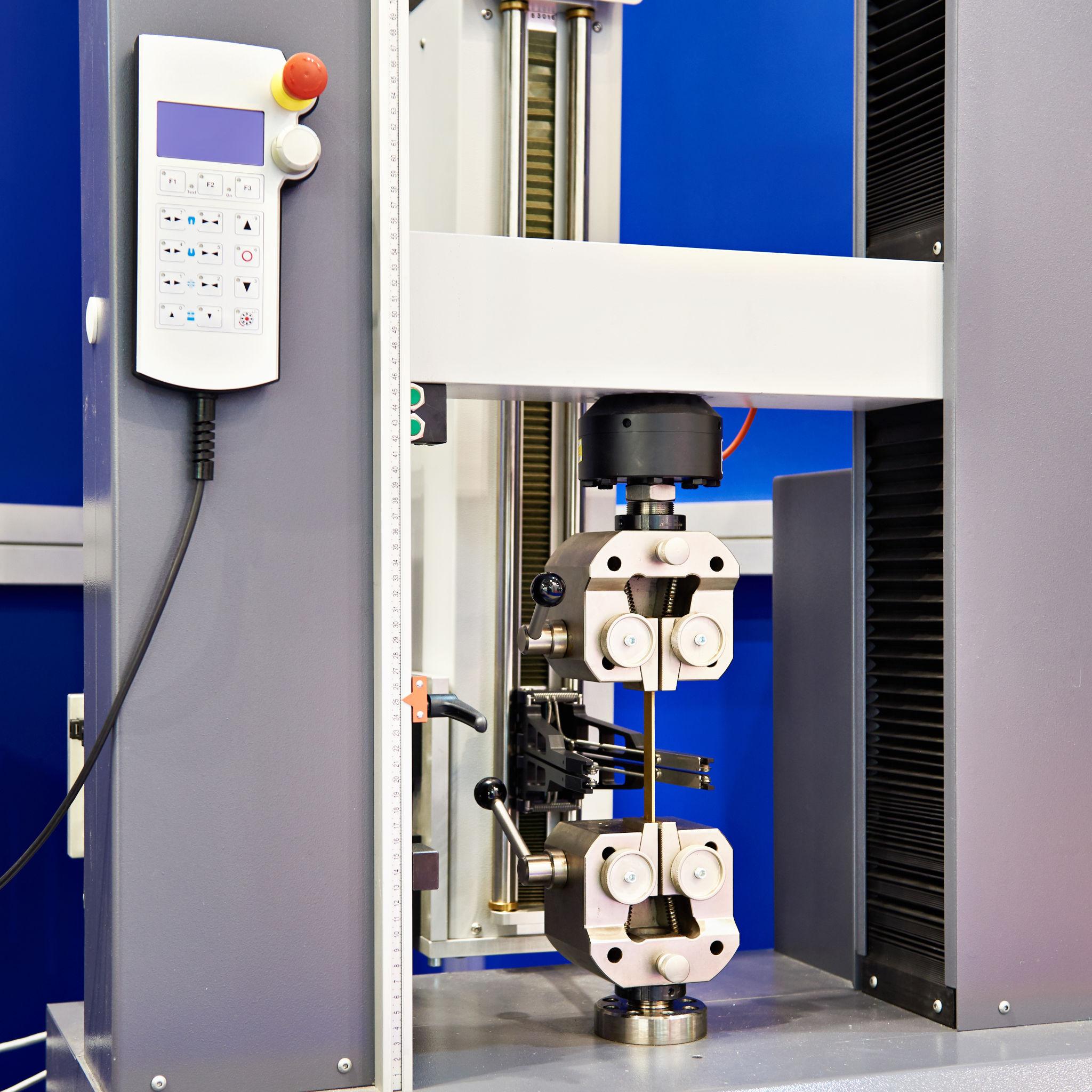
In today’s competitive manufacturing industry, producing high-quality products is not just an advantage—it’s a necessity. Whether you’re manufacturing plastic products, packaging materials, metals, textiles, rubber, or medical devices, ensuring that every material meets the required strength and durability standards is essential. This is where a Tensile Testing Machine becomes one of the most valuable pieces of equipment in any quality assurance laboratory.
At Zaaviya Technologies, we provide advanced material testing solutions that help industries evaluate the mechanical properties of materials with precision and reliability. A tensile testing machine is one of the most widely used instruments for Quality Control Testing because it allows manufacturers to verify the strength, flexibility, and durability of raw materials and finished products before they reach customers.
What is a Tensile Testing Machine?
A Tensile Testing Machine, often referred to as a Universal Testing Machine (UTM), is a laboratory instrument designed to measure how a material behaves when subjected to pulling or stretching forces. During the test, a sample is securely clamped between two grips. The machine gradually applies tension until the material deforms or breaks.
Throughout the testing process, the machine records important data such as:
- Tensile Strength
- Yield Strength
- Elongation
- Breaking Force
- Young’s Modulus
- Stress and Strain
These values help manufacturers understand the mechanical performance of a material and determine whether it meets international testing standards such as ASTM and ISO. Tensile testing is a standard method for evaluating material strength and mechanical performance across multiple industries.
How Does a Tensile Testing Machine Work?
The testing procedure is straightforward but highly accurate.
First, a specimen is prepared according to the relevant testing standard. The sample is then mounted between the machine’s upper and lower grips. Once the test begins, the machine applies a controlled pulling force at a constant speed.
As the force increases, specialized sensors continuously measure the applied load and the amount of material deformation. The software records these measurements in real time and generates a detailed stress-strain graph.
The final report provides engineers and quality control professionals with valuable insights into the material’s mechanical properties, allowing them to make informed manufacturing decisions.
Why is a Tensile Testing Machine Important for Quality Control?
Quality is the foundation of customer satisfaction and regulatory compliance. Without proper testing, manufacturers risk producing products that may fail during use, leading to recalls, financial losses, and damage to brand reputation.
A Tensile Testing Machine plays a critical role in Quality Control Testing by ensuring that every batch of material meets predefined specifications.
Some of its major benefits include:
1. Ensures Product Reliability
Products are expected to perform consistently under real-world conditions. Tensile testing verifies that materials possess sufficient strength and flexibility to withstand expected loads without failure.
2. Detects Manufacturing Defects
Variations in raw materials, production processes, or heat treatment can affect material performance. Tensile testing helps identify these issues before products leave the factory.
3. Maintains Consistent Product Quality
Regular testing ensures that every production batch delivers the same level of quality, reducing variability and improving customer confidence.
4. Supports Compliance with International Standards
Many industries require compliance with ASTM, ISO, DIN, and other international testing standards. Tensile testing provides documented evidence that products satisfy these requirements.
5. Reduces Production Costs
Early detection of defective materials minimizes waste, prevents costly recalls, and improves manufacturing efficiency.
Applications of Tensile Testing Machines
Modern Material Testing laboratories use tensile testing machines across numerous industries.
Some common applications include:
- Plastic and Polymer Testing
- Rubber Products
- Packaging Materials
- Textile Industry
- Wire and Cable Testing
- Metal Components
- Medical Devices
- Automotive Parts
- Aerospace Components
- Construction Materials
Each industry relies on accurate mechanical testing to ensure product safety and long-term performance.
Material Testing: More Than Just Strength
Although tensile strength is one of the primary measurements, modern Material Testing involves evaluating several mechanical characteristics that influence product performance.
These include:
- Elasticity
- Ductility
- Stiffness
- Fracture Point
- Maximum Load Capacity
- Permanent Deformation
By understanding these properties, manufacturers can improve product design, select better materials, and enhance overall performance.
Features of Modern Tensile Testing Machines
Today’s computerized testing machines offer significantly greater accuracy than older manual systems.
Advanced tensile testing machines typically include:
- High-precision load cells
- Servo-controlled motors
- Digital data acquisition
- Real-time graph generation
- Automatic test reports
- User-friendly software
- Multiple testing modes
- ASTM and ISO standard compatibility
These features allow laboratories to perform repeatable and highly reliable tests with minimal operator error.
Why Choose Zaaviya Technologies?
At Zaaviya Technologies, we understand that accurate testing is essential for maintaining product quality and customer trust. Our testing solutions are designed to meet the evolving needs of modern laboratories, research institutions, and manufacturing industries.
We offer reliable testing equipment backed by professional technical support, calibration services, installation assistance, and expert guidance. Our goal is to help organizations implement effective Quality Control Testing processes that improve efficiency and ensure compliance with international standards.
Whether your laboratory performs routine inspections or advanced research, Zaaviya Technologies provides dependable Material Testing solutions tailored to your specific requirements.
Conclusion
A Tensile Testing Machine is one of the most essential instruments for evaluating the mechanical properties of materials. It provides accurate information about strength, elasticity, and durability, helping manufacturers maintain high production standards and deliver reliable products to the market.
By incorporating tensile testing into regular Quality Control Testing, businesses can reduce defects, improve product consistency, comply with industry standards, and build greater customer confidence.
At Zaaviya Technologies, we are committed to providing high-performance Material Testing solutions that support innovation, precision, and quality across a wide range of industries.